
HOWLOFT / TOPIC GUIDES
Electrical protection
A breaker must detect trouble, open its contacts and stop the arc. Follow the mechanisms hidden behind the handle.
Begin with the complete explanation, then look inside each stage. These cutaways show why an overload and a short circuit prompt different responses, why holding the handle cannot prevent a protective trip, and why separating the contacts is only part of stopping current.
Your viewing path
Start here, then follow the connections. Each video has its own watch page.
 01 / 2:23
How a Circuit Breaker Stops a Fault: The Hidden Mechanisms
See the complete chain from fault detection to arc interruption.
Watch the explanation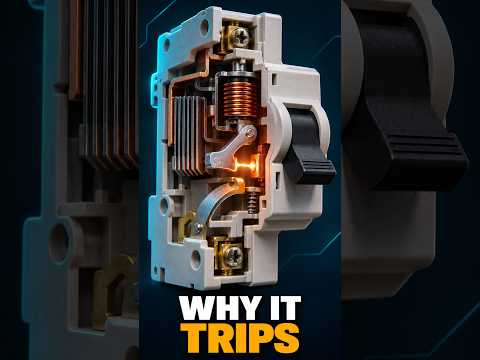 02 / 34s
Why Your Circuit Breaker Trips: Two Hidden Triggers
Compare the thermal and magnetic triggers.
Watch the explanation 03 / 38s
Why Circuit Breakers Wait Before Tripping | Howloft
Follow the strip that bends as it heats.
Watch the explanation 04 / 35s
Why Circuit Breakers Can Trip So Fast
Look at the magnetic mechanism used for a fast trip.
Watch the explanation 05 / 41s
Why Holding a Breaker ON Cannot Stop It Tripping
See why the handle cannot override a protective trip.
Watch the explanation 06 / 42s
Why Electricity Still Flows After a Breaker Opens
Follow the arc after the contacts have opened.
Watch the explanation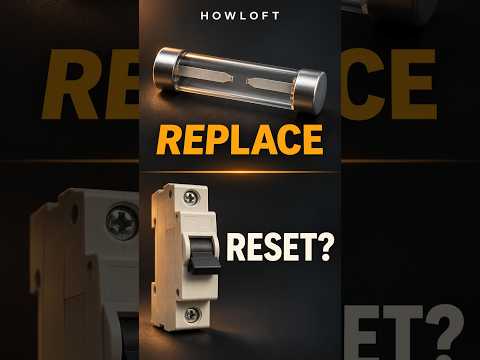 07 / 35s
Why a Fuse Must Be Replaced but a Breaker May Reset
A fuse and a circuit breaker can both interrupt excessive current. A conventional fuse melts its element, leaving a permanent break and requiring the correct replacement.
Watch the explanation
Questions to carry into the videos
- Why does a breaker wait for some overloads but react quickly to a severe fault?
- What lets the contacts open even when the handle is held on?
- Why can current keep crossing a gap after the contacts separate?
Curious what else is hidden behind an everyday switch? Subscribe to Howloft on YouTube for more animated engineering cutaways.