
What Protects You During a Car Crash
See how crumple zones, seatbelt tensioners, load limiters and airbags work together during a crash.
See the hidden engineering inside everyday machines. Explore train systems, truck brakes, gears and more through short reveals and full explanations. Then try our hands-on gear-ratio interactive.
Play here, or open the video on YouTube.
WATCH HOW IT WORKS
Published · 2:38 · Full video · By Howloft
Inside a truck brake chamber, air applies the service brake but holds the parking-brake spring back. Follow both systems in a simplified 3D cutaway.
Explore the explanationPrefer a quick reveal? Watch the truck parking-brake ShortLOOK CLOSER · FULL EXPLANATIONS
10 full explanations, newest first. Choose a mechanism and see how its parts work together.
Latest full explanationWhat Protects You During a Car Crash
See how crumple zones, seatbelt tensioners, load limiters and airbags work together during a crash.
Follow how a contactless card receives power, exchanges data with a reader, and participates in a payment.
Compare crush-cartridge and sand-barrel crash cushions, including how deformation, momentum transfer, and clearance differ.
Inside a truck brake chamber, air applies the service brake but holds the parking-brake spring back. Follow both systems in a simplified 3D cutaway.
Follow a wheel-speed sensor and hydraulic ABS unit as they hold, reduce and reapply brake pressure to help a wheel keep turning during hard braking.
See how a mechanical watch turns stored spring energy into measured motion, with the balance, hairspring and escapement working together.
Follow a fixed-flow hydraulic circuit when the ram cannot move: a relief valve limits pressure, routes oil back to the tank and can produce heat.
Trace one hydraulic-jack pump cycle through its check valves and lifting piston, then see how leverage and piston area trade travel for lifting force.
The engine can keep turning while the car is stopped because the clutch can interrupt the connection. See how that connection is rebuilt through friction.
A gearbox changes the relationship between engine speed and wheel speed. Follow the gear ratio to see where the extra turning force comes from.
CHOOSE A VIEWING PATH
Three connected explanations: the gears, the wheels, and the clutch that brings them together.
See how a gearbox trades speed for turning force.
Full video · 4:35Discover why the wheels need different speeds in a turn.
Short · 31sConnect the engine to the gearbox, and understand a stall.
Full video · 2:05CHOOSE A VIEWING PATH
Start with a tiny piston, follow a complete jack cycle, then see what limits a hydraulic press.
See the force-versus-distance trade-off in one quick reveal.
Short · 30sExplore how the jack lifts a car and holds the load between strokes.
Full video · 2:21Follow the relief path when a hydraulic press stops moving.
Full video · 2:23CHOOSE A VIEWING PATH
From controlled braking to crash protection, then a closer look inside the seatbelt.
See how ABS manages wheel-brake pressure during hard braking.
Full video · 2:31Explore how the car structure, seatbelt and airbag work together during a crash.
Full video · 2:20See why the belt locks when it is pulled suddenly.
Short · 35s01 / THE WATCH LIST
Choose a Short for one quick reveal, or a full video for a deeper explanation. Explore each episode and its written explanation.
68 of 68 episodes shown
 REVEAL / 046Full video · 2:39
Inside a truck brake chamber, air applies the service brake but holds the parking-brake spring back. Follow both systems in a simplified 3D cutaway.
 REVEAL / 068Video · 32s
This emergency turbine carries no fuel of its own. So what limits its power? The airflow driving it. As the aircraft moves, air turns the rotor and the rotor drives emergency equipment. Slower airflow means less energy is available to extract. A governor can control the rotor’s speed, but it cannot create missing energy. That is why this backup has
 REVEAL / 067Video · 33s
Why does the iodine clock reaction wait, then suddenly turn blue-black? Iodine is produced while another reaction removes it. Once the removing reactant is used up, iodine accumulates and forms a blue-black complex with starch. The reaction was happening all along: the colour makes it visible. Conceptual educational visualisation. Molecules, timin
 REVEAL / 066Video · 33s
Why does an airliner carry a small turbine that can deploy into the airflow? A ram air turbine, or RAT, turns the aircraft’s movement through air into backup power. Depending on the aircraft design, its shaft helps supply hydraulic power, electricity, or both to essential systems. It does not replace engine thrust. Original Howloft illustrative 3D
 REVEAL / 065Video · 31s
Why do side airbags need to inflate so quickly? In a side impact, there is much less space between an occupant and the striking object than at the front of the car. This Howloft animation explains why side airbags have a very short time to provide cushioning. A side-thorax airbag can protect the chest, while a curtain airbag can help protect the h
 REVEAL / 064Video · 41s
The seatbelt tightens during emergency braking, but the crash never happens. Has a safety device been used up? Not necessarily. Some vehicles use a motorised, reversible pretensioner to pull the belt snug before a possible crash. If the danger passes, it can release the extra tension and operate again. A pyrotechnic pretensioner is different: once
 REVEAL / 063Video · 40s
The car is damaged, but the airbag did not open. Did it fail? Not necessarily. Airbags are not intended to deploy in every collision. This Howloft animation explains how impact direction, severity and the vehicle’s restraint-system design affect whether a particular airbag is needed. Visible damage alone cannot tell you what the system should have
 REVEAL / 062Full video · 2:20
See how crumple zones, seatbelt tensioners, load limiters and airbags work together during a crash.
 REVEAL / 061Video · 39s
See why seatbelts and airbags work together to control occupant movement during a crash.
 REVEAL / 060Video · 35s
A seatbelt load limiter allows controlled payout to manage chest loading while the belt continues restraining the occupant.
 REVEAL / 059Video · 35s
Learn how a pretensioner removes seatbelt slack, and why that differs from the retractor locking.
 REVEAL / 058Video · 36s
Discover how deforming crumple zones and a strong passenger compartment perform different jobs in crash protection.
 REVEAL / 057Full video · 2:18
Follow how a contactless card receives power, exchanges data with a reader, and participates in a payment.
 REVEAL / 056Full video · 2:18
Compare crush-cartridge and sand-barrel crash cushions, including how deformation, momentum transfer, and clearance differ.
 REVEAL / 055Video · 33s
Understand why a gating sand-barrel cushion needs suitable surrounding space and a site-specific layout.
 REVEAL / 054Video · 35s
See how accelerating sand helps slow a vehicle, and why barrel order is part of an engineered crash-cushion layout.
 REVEAL / 053Video · 33s
Follow the sliding sections and crush cartridges inside a telescoping highway crash cushion.
 REVEAL / 052Video · 33s
Learn how connected side panels can guide a suitable angled impact along a redirective crash cushion.
 REVEAL / 051Video · 36s
See why crushable cartridges and telescoping sections are deliberate features of a crash cushion.
 REVEAL / 050Video · 36s
The screw stops, but the motor keeps turning. What makes a cordless drill click? This cutaway follows a representative spring-loaded ball-and-ramp torque clutch: the balls hold a reaction ring until resistance reaches the selected limit, then ride over the ramps as the ring slips. Turning the numbered collar higher increases spring preload in this
 REVEAL / 024Short · 24s
Follow a representative traction lift’s downward-overspeed system from its governor and rope clamp to safety wedges that grip the guide rails.
 REVEAL / 042Short · 29s
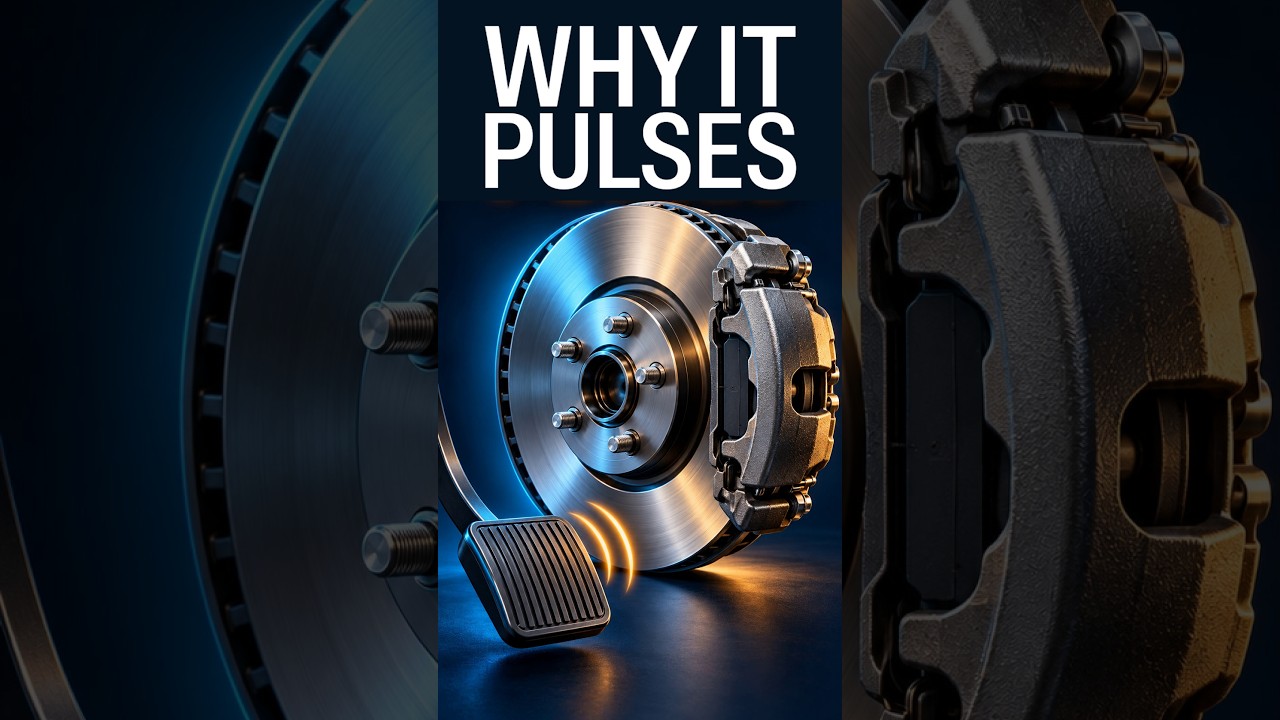
Hydraulic ABS changes wheel-brake pressure through valves and a pump. Those pressure changes can be felt as pulses at the brake pedal.
 REVEAL / 022Short · 26s
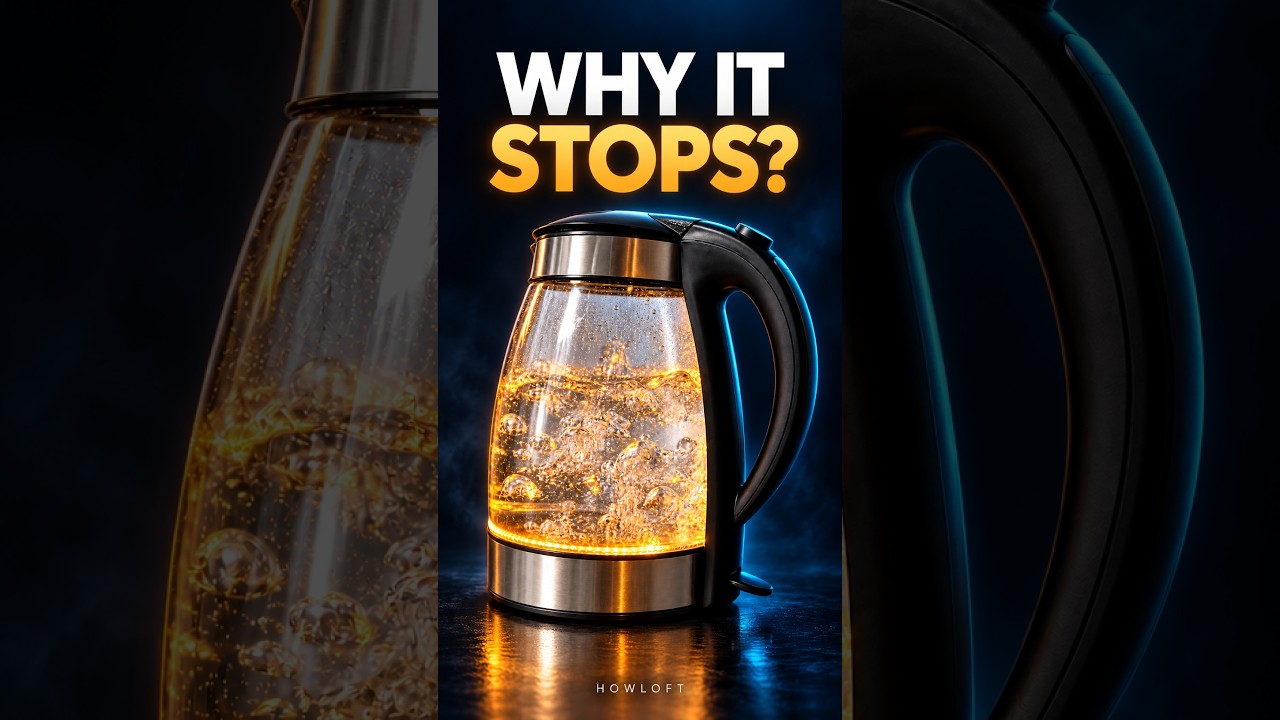
In a representative steam-operated kettle, steam heats a bimetallic disc that snaps and opens the electrical contacts to switch off the power.
 REVEAL / 046Video · 30s
Why do truck air brakes hiss—and does it mean the brakes are going on or coming off? This moving cutaway explains two different actions: service air pressure applies the brake, while releasing that air allows it to release. In the separate spring-parking section, air holds a powerful spring back; venting that hold-back air allows the spring to app
 REVEAL / 045Short · 39s
See how a conducting wheelset changes current in a basic DC track circuit, releasing a relay so the system can report that the track is occupied.
 REVEAL / 048Short · 37s
A warning, a release-and-repress pedal response, then automatic emergency braking if the driver does not respond. See what Class 66 vigilance checks—and what it cannot know.
 REVEAL / 047Short · 28s
A truck’s parking-brake spring is held back by compressed air. Releasing that air lets the spring apply the brake, unlike normal service braking.
 REVEAL / 044Short · 32s
Sand at the wheel–rail contact can help a train transmit driving or braking force, but sanding must also be compatible with electrical train detection.
 REVEAL / 043Short · 38s
Follow paired switch rails and wheel flanges through a railway turnout, with the points set, locked and checked before the train enters.
 REVEAL / 041Short · 41s
Explore a common three-layer aircraft passenger window and the small middle-pane vent that lets the gap pressure follow cabin pressure.
 REVEAL / 040Short · 26s
ABS can briefly reduce pressure at a wheel even while the pedal stays pressed, helping the wheel regain rotation within available tire-road grip.
 REVEAL / 039Short · 38s
In one pressure-cooker safety design, a fusible metal plug melts at its designed temperature to open a steam passage separate from the normal regulator.
 REVEAL / 038Short · 37s
Safety wire is a secondary locking measure for properly tightened aircraft fasteners. Its pull should oppose loosening, not encourage it.
 REVEAL / 037Full video · 2:31
Follow a wheel-speed sensor and hydraulic ABS unit as they hold, reduce and reapply brake pressure to help a wheel keep turning during hard braking.
 REVEAL / 036Short · 30s
A lightly resisted bolt can follow a ratchet backward if it turns more easily than the tool resets. Look inside the pawl-and-tooth mechanism.
 REVEAL / 035Short · 19s
In a glass-bulb sprinkler, heat expands the bulb’s liquid until the glass breaks; a separate cap releases and water spreads across a deflector.
 REVEAL / 034Short · 24s
A rotating hook carries the upper-thread loop around the bobbin case, interlocking it with bobbin thread to form a sewing-machine lockstitch.
 REVEAL / 033Full video · 2:01
See how a mechanical watch turns stored spring energy into measured motion, with the balance, hairspring and escapement working together.
 REVEAL / 032Short · 26s
A stationary hydraulic ram does not mean the oil has stopped. In a fixed-flow circuit, flow through a relief valve can turn hydraulic energy into heat.
 REVEAL / 031Short · 28s
Specially prepared nitinol can recover a preset shape when heated through a solid-state crystal change. It is not melting or behaving like ordinary steel.
 REVEAL / 030Short · 29s
A falling magnet induces eddy currents in a copper pipe. Their magnetic field creates an upward braking force, illustrating Lenz’s law.
 REVEAL / 029Short · 32s
A Prince Rupert’s drop stores opposing stresses in its surface and core. Damage to the stressed tail can let a crack trigger rapid fragmentation.
 REVEAL / 028Short · 25s
Inside one twin-hammer air impact wrench, two pivoting hammers strike the output anvil, swing clear and accelerate again for the next blow.
 REVEAL / 027Short · 27s
When a press ram stops in a simple fixed-flow circuit, a relief valve routes oil back to the tank and limits the available pushing force.
 REVEAL / 026Channel trailer · 29s
Meet Howloft: original 3D explanations that look inside everyday machines and technology to show how their parts work together.
 REVEAL / 025Full video · 2:23
Follow a fixed-flow hydraulic circuit when the ram cannot move: a relief valve limits pressure, routes oil back to the tank and can produce heat.
 REVEAL / 023Short · 24s
A tape-measure hook slides to compensate for its own thickness, allowing inside and outside measurements to use the same scale.
 REVEAL / 021Short · 23s
Two synchronized offset chains carry a paternoster cabin through matching curves, keeping its floor level as it travels around the loop.
 REVEAL / 020Short · 26s
A cut-and-fold paper fastener makes a flap and slit, then draws the flap through the slit so the sheets become their own fastening material.
 REVEAL / 019Short · 30s
A hydraulic jack combines handle leverage with pressure acting over a larger piston area. Extra lifting force comes at the cost of movement distance.
 REVEAL / 018Short · 19s
Locking pliers move a toggle linkage just beyond centre, so the jaw load holds it against a stop until the release lever reverses that movement.
 REVEAL / 017Short · 20s
Look inside a Sweet-style automatic centre punch, where a spring, hammer and tilted-pin release turn a slow push into a sharp strike at the tip.
 REVEAL / 016Short · 23s
A key may enter the right keyway yet leave one pin blocking the shear line. See how the right cuts align the pin splits so the lock plug can rotate.
 REVEAL / 015Short · 36s
Pressure beneath a hydraulic jack’s lifting piston holds the outlet check valve shut while the pump refills, keeping the load raised between strokes.
 REVEAL / 014Short · 32s
A rotary cam alternates between ledges and grooves inside a click pen, holding the refill out after one click and letting the spring retract it after the next.
 REVEAL / 013Full video · 2:21
Trace one hydraulic-jack pump cycle through its check valves and lifting piston, then see how leverage and piston area trade travel for lifting force.
 REVEAL / 012Short · 34s
Equal force on equal-size pistons produces different movement in sealed air and water syringes, illustrating why trapped air can make hydraulics feel spongy.
 REVEAL / 011Short · 35s
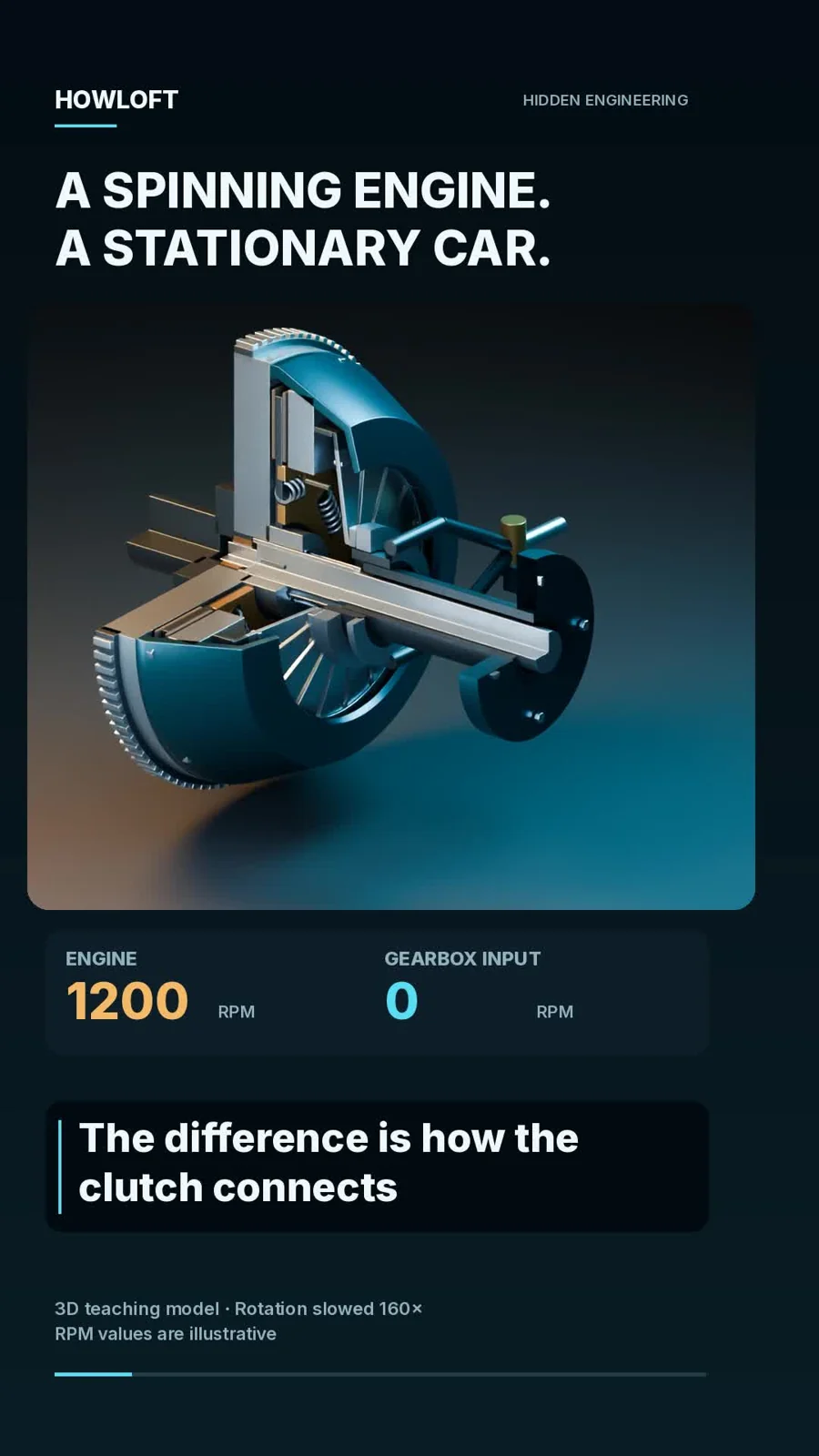
A running engine meets the load of a stationary car. This short focuses on the moment the clutch engages and why engine speed can collapse.
 REVEAL / 010Full video · 2:05
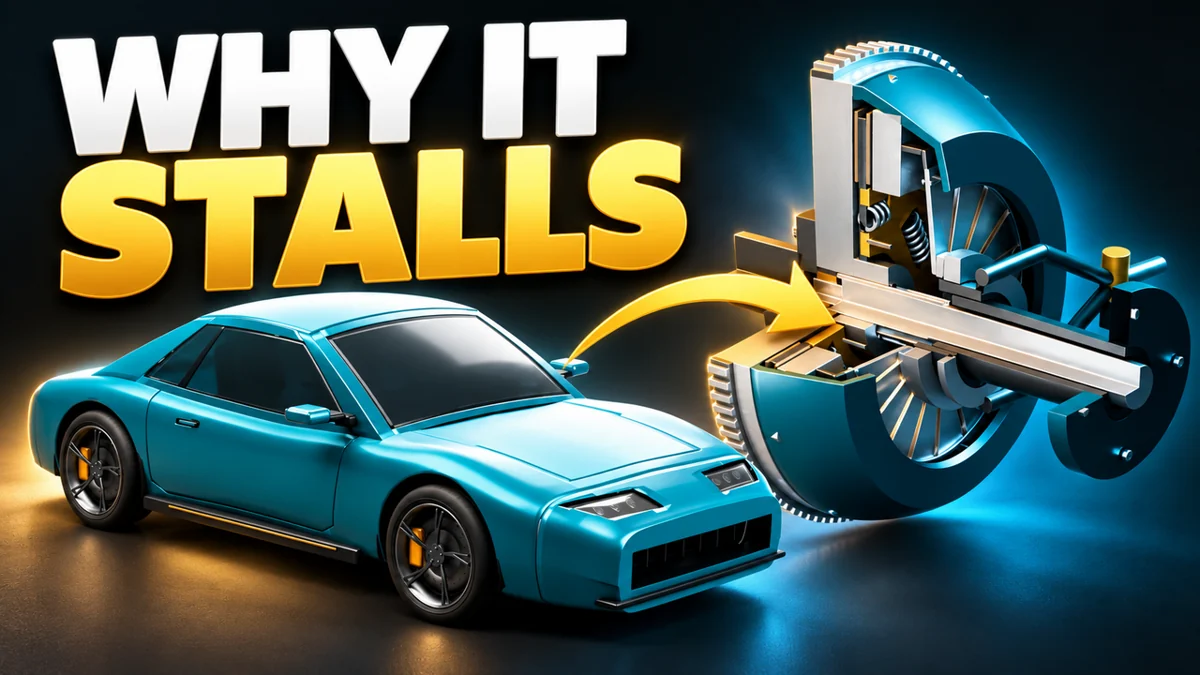
The engine can keep turning while the car is stopped because the clutch can interrupt the connection. See how that connection is rebuilt through friction.
 REVEAL / 009Short · 33s
A zipper works by guiding two rows of fastening elements through a Y-shaped slider. Moving the slider joins the rows or separates them again.
 REVEAL / 008Full video · 4:35
A gearbox changes the relationship between engine speed and wheel speed. Follow the gear ratio to see where the extra turning force comes from.
 REVEAL / 007Short · 46s
The glass is a cover over a sensing system. Follow the tiny change in electrical coupling that helps a touchscreen locate your finger.
 REVEAL / 006Short · 35s
A gentle pull lets the belt out. A sudden tug can trigger the retractor's locking mechanism. Look inside the system that makes both possible.
 REVEAL / 005Short · 33s
A train follows a bend without a steering wheel. This reveal looks beneath the carriage at the wheels and rails, where a clever change in rolling radius helps a wheelset follow a curve. Watch the mechanism, then look at the next passing train a little differently.
 REVEAL / 004Short · 33s
A petrol pump stops when fuel covers a sensing hole in the nozzle. A vacuum change releases the valve latch, shutting off the flow with a click.
 REVEAL / 003Short · 36s
DRAM stores bits as tiny electrical charges that need refreshing. Without power, refresh stops and data is lost. SSD storage keeps saved files without power.
 REVEAL / 002Short · 31s
When a car turns, its wheels follow different paths. This episode looks at the differential: the gear arrangement that lets the driven wheels rotate at different speeds. Follow the movement and see the familiar corner from inside the mechanism.
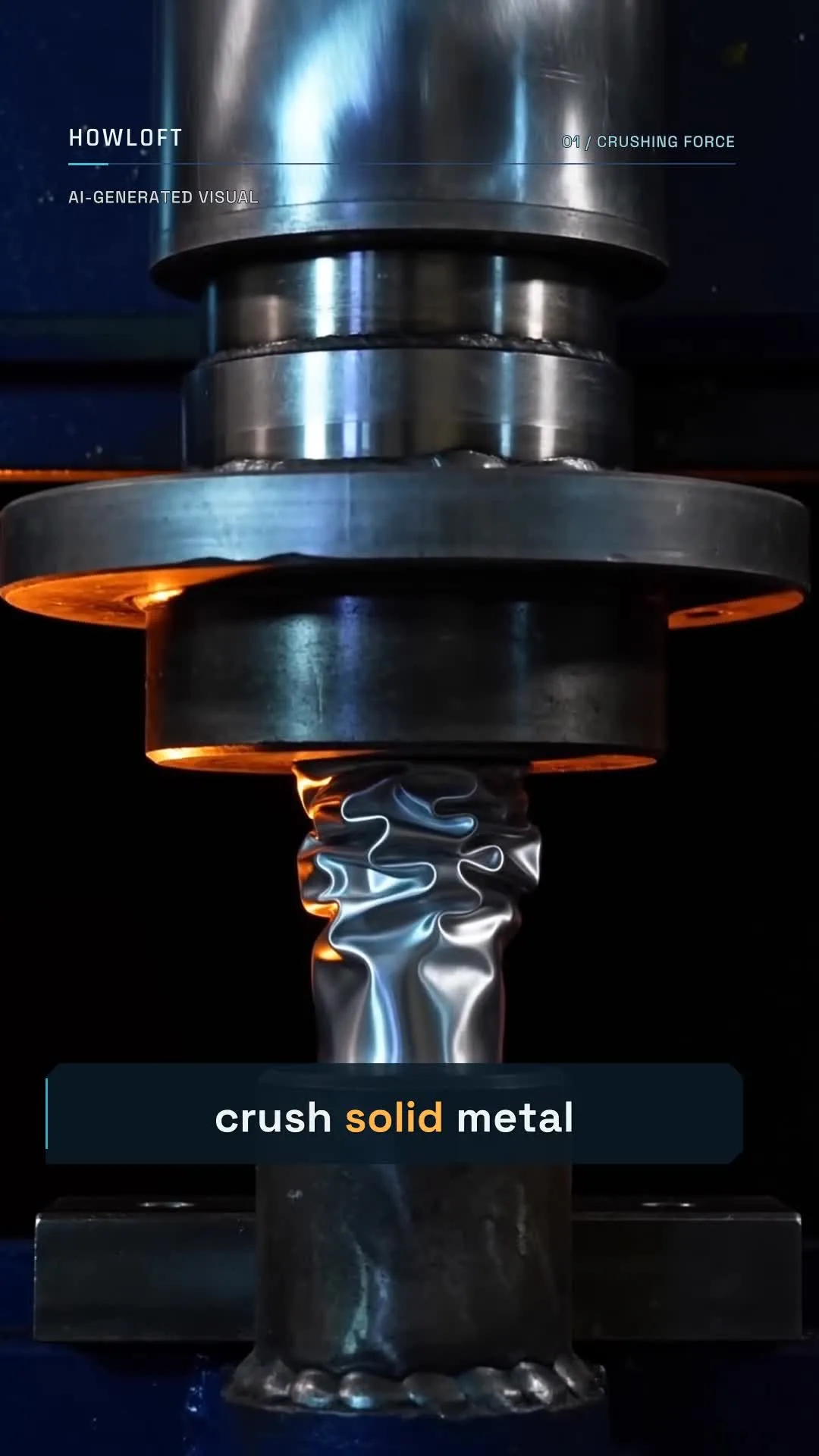 REVEAL / 001Short · 31s
A hydraulic press uses liquid pressure to push a piston. Force equals pressure times piston area, so a larger piston produces more force at the same pressure.
TRY IT, THEN UNDERSTAND IT
The input gear is the driver. The output gear is the driven gear. In this pair, both gears must pass the same number of teeth through the contact point in the same time. A gear with twice as many teeth therefore needs twice as long to complete a turn.
Output RPM = input RPM × input teeth ÷ output teeth
Try 60 RPM with the 16-tooth input and 32-tooth output: 60 × 16 ÷ 32 = 30 RPM. The 2:1 reduction halves the output speed. Choosing 16 teeth for both gives 60 RPM at the output.
Try the gear ratio interactiveGo further: MIT — gear speeds, tooth counts and power · KHK — gear dimensions and speed ratios
The teeth push against one another at the outside of each gear. For this external gear pair, clockwise rotation of one gear drives the other anticlockwise.
Using the reduction-ratio convention shown here, the input turns twice for each output revolution. Other sources may express the reciprocal speed ratio, so always check which quantity is being compared.
No. An ideal reduction trades speed for torque. Real gears also lose some energy through friction, so output power is lower than input power.
FOLLOW A TOPIC
Four paths through the collection, from a first explanation to the details inside.
02 / GOOD QUESTIONS WELCOME
That thing you’ve always wondered about? We want to hear it. Your question could become our next reveal.
Make your prediction, then try the gear cutaway above.
The familiar,
seen differently.
03 / THE PEOPLE BEHIND THE HOW
Howloft is an online educational channel exploring machines, everyday engineering and surprising science. Each episode follows a mechanism from a familiar question to a clear visual explanation.
Something you’ve noticed. Something worth understanding.
Follow the part, force or movement that makes it happen.
Clear narration, purposeful animation and one satisfying explanation.
Our visuals combine animation and illustrative imagery, including AI-assisted assets. Models are simplified to make each idea clear. Read Howloft’s sourcing and corrections approach.
04 / LET’S MAKE SOMETHING CLICK
Bring a product, a mechanism or a technical story. We’ll turn it into a visual explanation people want to finish.
Howloft publishes online engineering explainers. Email Howloft for collaborations, questions or corrections
A relevant brand woven into a useful, original explanation.
Custom visual stories for your product, website or campaign.
Ideas worth exploring with makers, educators and curious people.
THERE’S ALWAYS ANOTHER “HOW?”